


















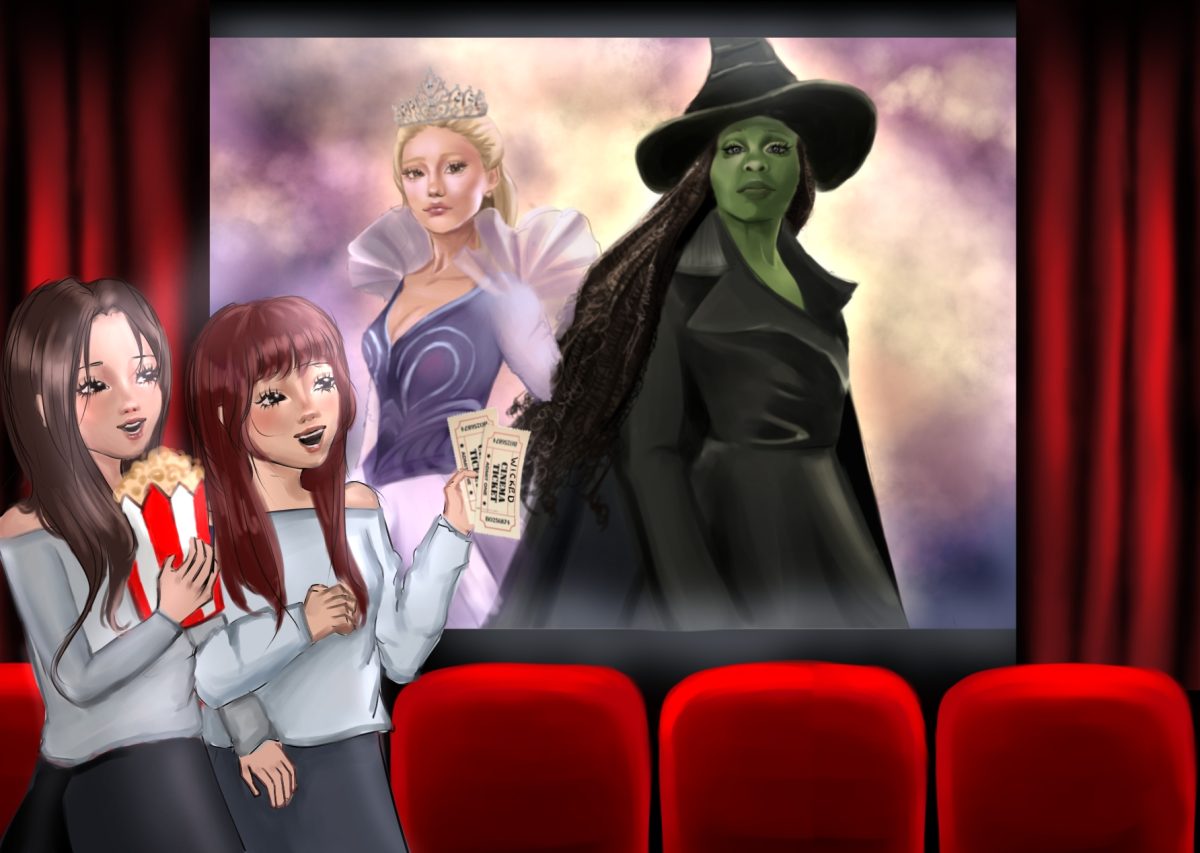
On Nov. 21, Wicked: For Good released across the U.S., completing the Broadway-adapted story of revolution and enduring love. Audiences expected a spectacle after the widely adored Part One and the sequel delivered, as stunning performances and visuals earned it over $390 million by December. A worthy sequel and poignant rendition of the musical, the film builds on previous media to give a hundred-year-old story a fresh dimension.
The film picks up at the beginning of the musical’s second act, set a year after the first installment, with Elphaba (Cynthia Erivo) continuing to fight the Wizard of Oz’s (Jeff Goldblum) corrupt regime and oppression of speaking Animals. Meanwhile, her former friend Glinda (Ariana Grande) works with the Wizard as a figure of hope and safety for the people, and her unwilling fiancé Fiyero (Jonathan Bailey) leads the government’s hunt for Elphaba while secretly aiming to protect her as the country sizzles with unrest.
For Good uses the additional runtime to deepen both women’s arcs beyond the stage show’s offerings. Elphaba’s campaign for Animal rights, as shown in the new song “No Place Like Home,” explains why she stays in Oz and gives her an emotional connection to her cause. Another addition, “The Girl in the Bubble,” and flashbacks of her younger self (Scarlett Spears) complete Glinda’s transition from a social climber prioritizing her own safety to a public servant who does what’s difficult. Flashbacks to her younger self (Scarlett Spears), desperate to fit in, ground her mistakes in insecurity over vanity.
These new scenes and dialogue deepen Elphaba and Glinda’s connection and clarify choices that originally seemed hasty. Glinda’s protective behavior and inclusion in the song “Wonderful” underline their resilient bond, as Elphaba’s temporary trust in the Wizard makes more sense considering the genuine joy she experiences with Glinda.
Erivo fully commits to the complexities of Elphaba’s position as both a revolutionary and human being — especially in a riveting “No Good Deed” — calling out to those similarly fighting an amoral system for a better future. Meanwhile, Grande grounds her portrayal in reality and maintains Glinda’s good heart even in her worst moments, with high notes as crystalline as they are heart-wrenching or uplifting as the moment calls for.
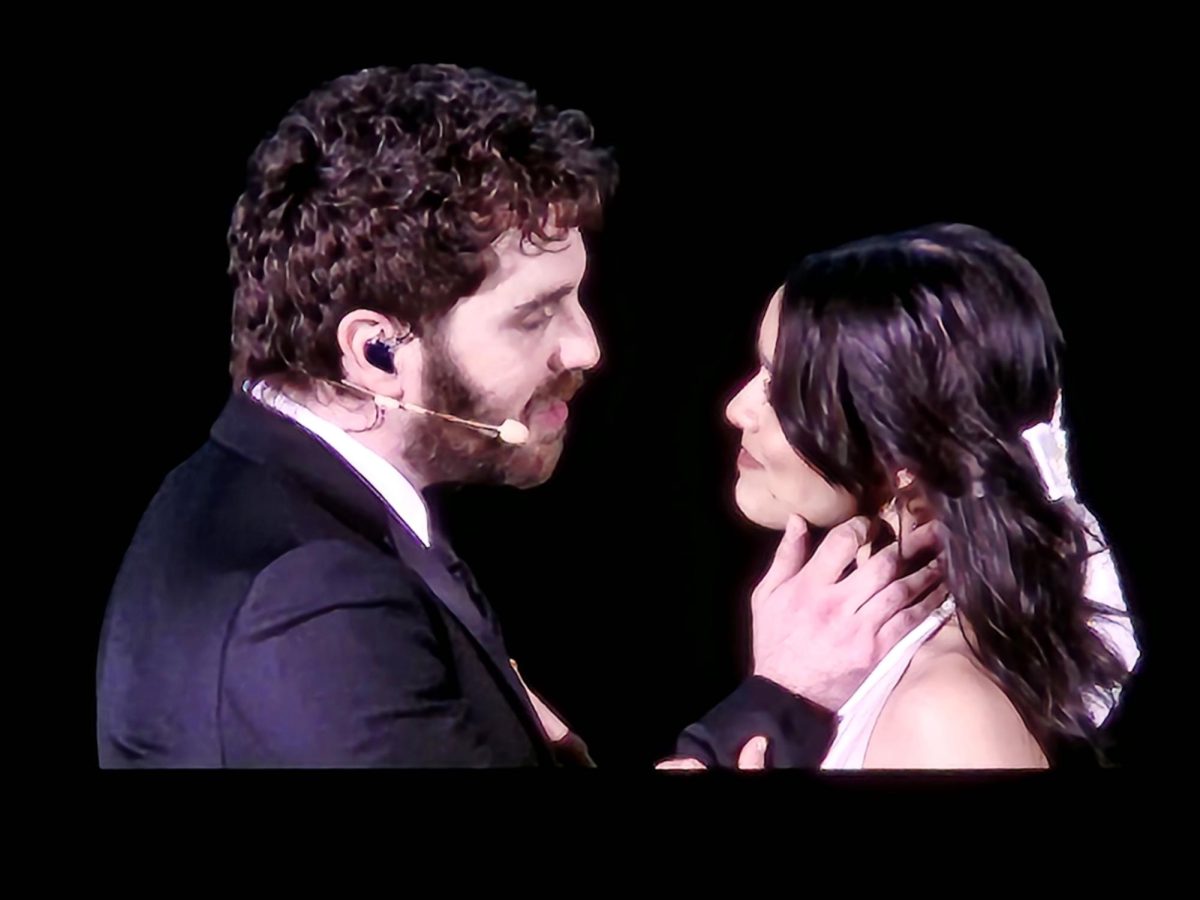
Leading a group of strong supporting actors, Bailey stuns with powerful belts in Fiyero and Elphaba’s duet, “As Long As You’re Mine,” telegraphing Fiyero’s yearning with held gazes and careful touches as clearly as if he were singing. Nathan Crowley’s lavish sets bring every corner of Oz to life, from the glittering metropolis of Emerald City to the spires and storms of Kiamo Ko Castle.
Despite Grande’s immense talent, her occasionally muddy diction dampens certain songs’ emotional impact, such as opening number “Thank Goodness.” Composer Stephen Schwartz’s new songs, particularly “The Girl in the Bubble,” also use repetitive refrains and imagery to force the points home with little subtlety. Still, the ballads closely link the film to current world events, especially the U.S.’s rising deportation rates, and the dichotomy of privilege and sacrifice formed as a result of tyranny.
Wicked: For Good builds on the strength, honesty, and deep human connections that made the stage musical so beloved, earning it a shining place in theatre history. It could inspire both future Broadway adaptations and people everywhere trying to spread hope in a changing world.