







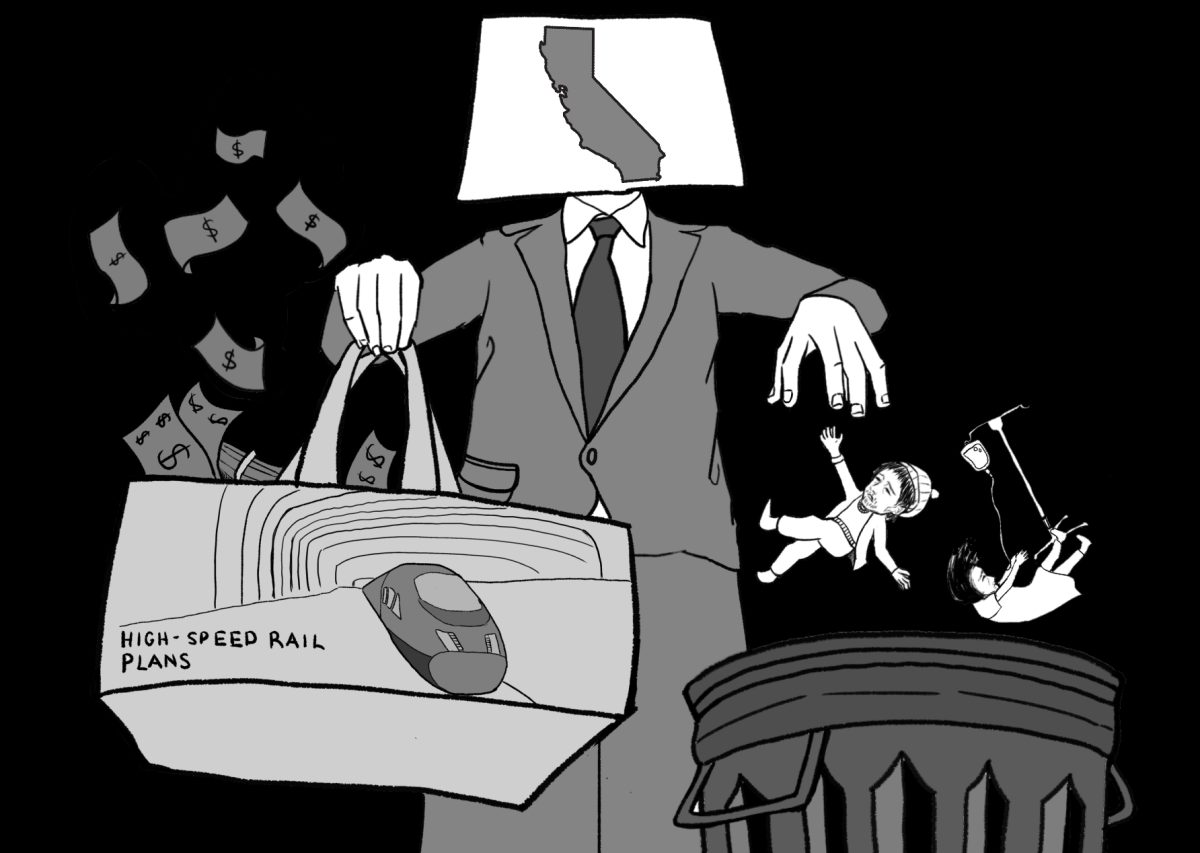
















































California is wasting millions of tax payer money. In 2008, California voters approved Proposition 1, which proposed the plan to connect major cities San Francisco and Los Angeles, using a high-speed rail system. Originally, the projected cost was around $30 billion, but since, it has climbed to an astounding $135 billion dollars. 18 years later, they have finally finished their first 150-acre hub, where they can now start laying down track. Given its high cost and ongoing public controversy, California must defund its High Speed Rail project: a poor investment of time and public funds.
The high speed rail is projected to cost over 100 billion more dollars than originally planned because of higher construction costs. However, Japan’s first high-speed rail, the Tōkaidō Shinkansen, was built in 1964 and, adjusted for inflation, only cost around 20 billion.
Moreover, the public opinion on the project is extremely mixed. A poll showed that 54% of Californians support the continued funding for the project, a drop from 2022 polls. Instead of spending so much money on something so split, the state could invest into residents’ priorities: for example, improving the healthcare system. Medi-Cal, California’s Medicaid program, offers low-cost medical programs for more than one-third of California’s population. With federal policy reducing federal funding for the program, funds from the High Speed Rail System , both a waste of time and resources, can instead be used to ensure Medi-Cal’s integrity. Additionally, with 130 billion, the California homelessness crisis could be solved. There are 173,806 homeless people in California as of 2026 according to demographic tracking website EARTHWEB. If every homeless individual were given $500,000, there’d still be over 48 million dollars left over.
On the other hand, people in favor of the project’s high funding say the project could increase access to jobs and education by connecting major cities together under one line. However, this reasoning overlooks factors that create these disparities in the first place, such as affordable housing. Instead of pumping billions into the High Speed Rail System, that money could be used to fix the root causes of the issues that the high speed rail intends to fix. Funding programs to aid the core problems in California, like affordable housing, would do far more than a high speed rail system would.
It has been over 18 years since the plan was approved and California residents have seen virtually zero progress, yet the High Speed Rail System has already spent over 10 billion dollars. The project is wasting valuable resources and still failing to meet its purpose; defunding the project would allow California to invest billions of dollars into other projects that would do better for its residents. While a high speed rail could help the traffic issue in California, it’s not enough to justify the amount of time and money it’s taken for such little progress.