


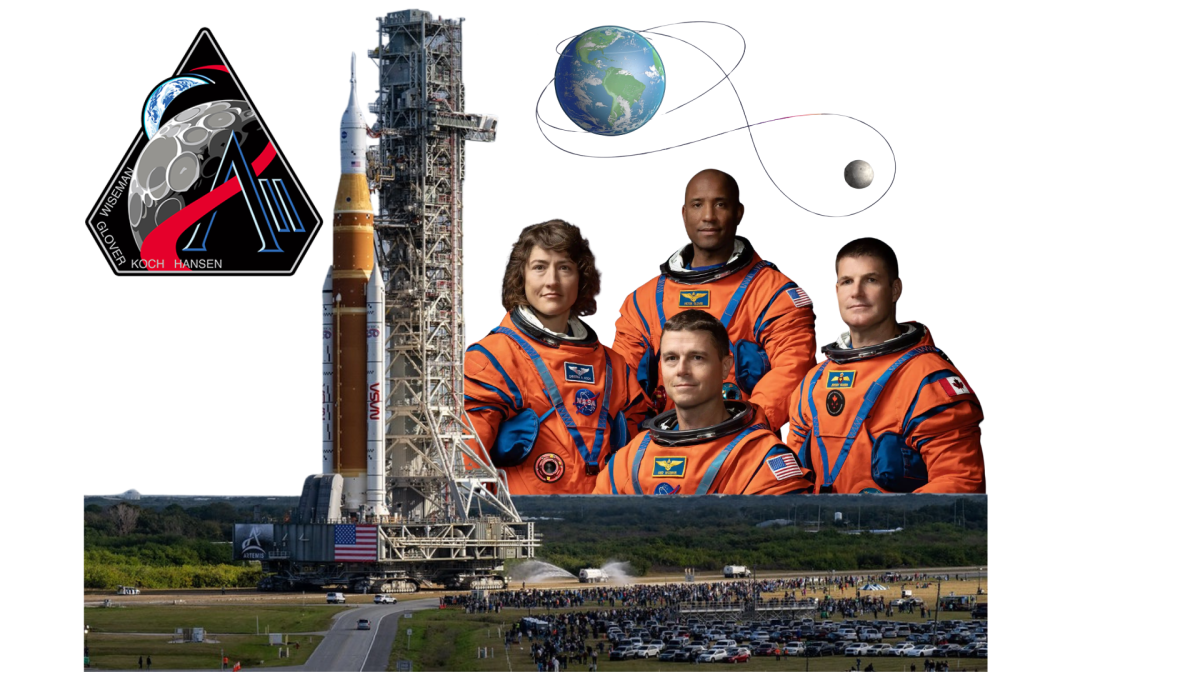













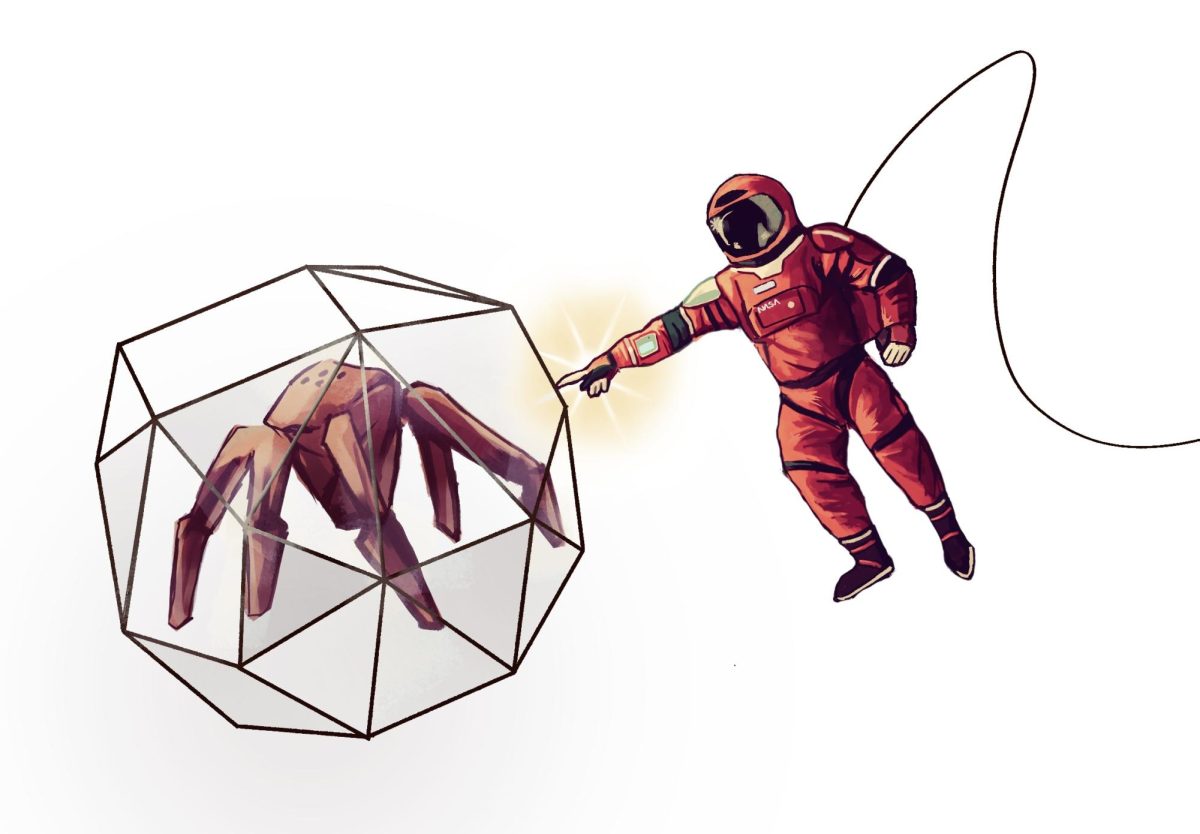


















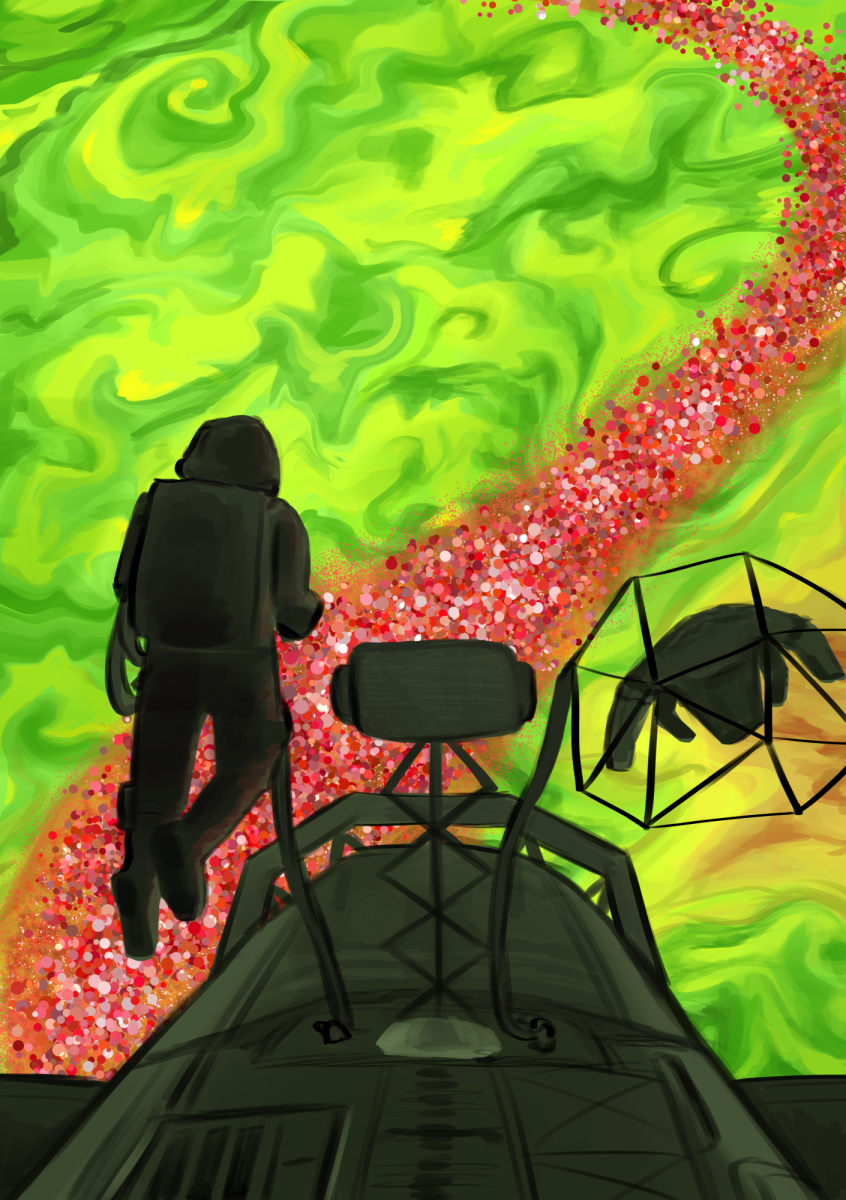
















As the first mission since 1972 sending people around the moon, Artemis II has broken barriers with the completion of a successful orbit, splashing down on April 10 at 5:06 PM. The journey is the second mission of a planned five-part program run by the National Aeronautics and Space Administration (NASA), aiming to bring inhabitants onto the moon. Launched on Apr. 1 at 6:35 PM in Florida at the Kennedy Space Center, the rocket completed a 10 day round-trip to and from the moon.
The crew is composed of four astronauts: Christina Koch, Victor Glover, Reid Wiseman, and Jeremy Hansen. The Artemis II mission serves as a beacon of hope for multiple reasons—the first Black and first female astronaut were sent to the moon in this expedition. Koch holds the record for longest spaceflight for a woman — 328 days — and Glover was also the first Black astronaut to complete a long-term stay in the International Space Station.
I live in this dichotomy between happiness that a young woman can look at Christina and just physicalize her passion or her interests and that young, Brown boys and girls can look at me and go, ‘He looks like me,'” Glover said. “But I also hope we are pushing the other direction that one day, this is just human history.”
Together, the crew tested the Space Launch System and the Orion life support system to ensure it can inhabit human life in deep space, opening gateways into human exploration on Mars and potential living establishments on the moon.
Simultaneously, NASA ran experiments testing biological function outside the Earth’s safety. A Virtual Astronaut Tissue Analog Response (AVATAR) included lab-grown tissues focusing on bone marrow growth in the wake of radiation and gene reaction to space flight. They also ran Artemis Research for Crew Health and Readiness (ARCHeR) which recorded the aspects of astronauts’ sleep and the immune system.
The prospective discoveries from this mission encompass a wide range of scientific fields, from robotics to astronomy to medicine. As the mission launched, hundreds of thousands of people showed up to watch at the launch site, and 10 million more turned on their screens to watch the event, sparking hope within U.S. citizens alike.
“I’ve been waiting almost my whole life to see this,” said NASA Administrator Jared Isaacman. “As NASA Administrator, I couldn’t be more proud of the entire workforce—the years, the effort, the late nights, all the hard work across the country that contributed to this incredible moment.”