



















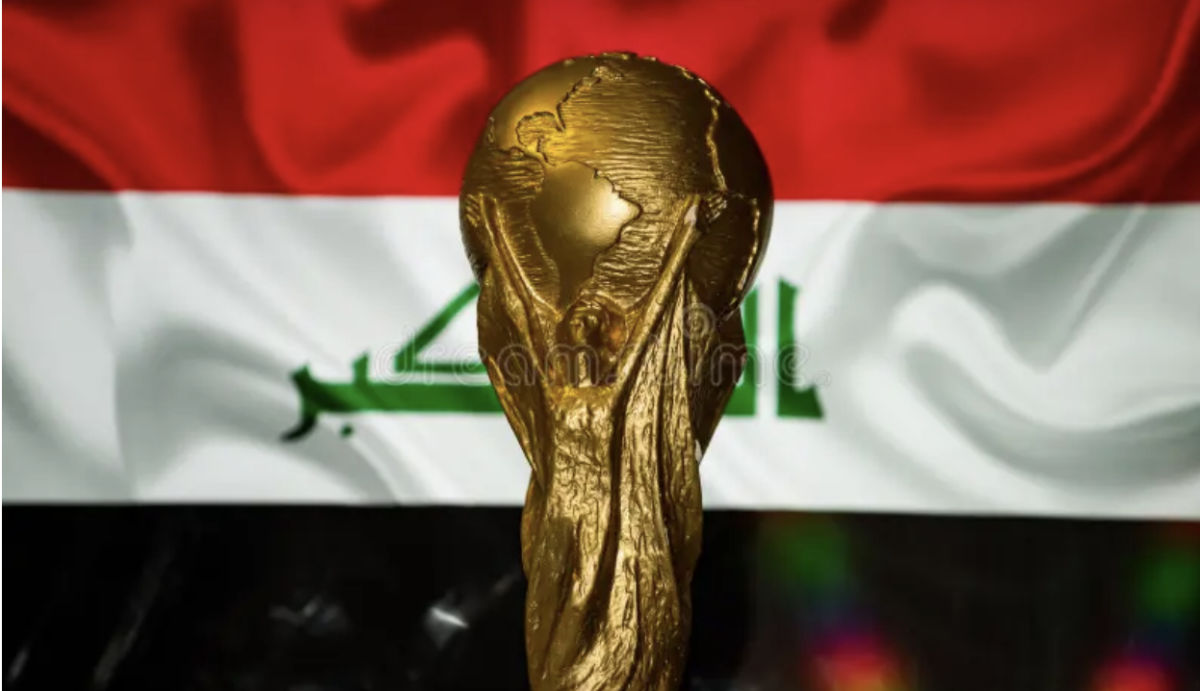






























Returning to the global stage this summer, Iraq follows their 40-year World Cup hiatus by qualifying for the 2026 FIFA (Fédération Internationale de Football Association) World Cup. While the World Cup has been held every four years by FIFA since its inception in 1930, Iraq had previously only qualified once in 1986, making its recent return a meaningful occasion.
Iraq’s lack of World Cup qualifications wasn’t a reflection of skill; rather, it was a result of conflict and restrictions. Facing decades of war and instability such as the Iran-Iraq War, the Gulf War, and the US-led invasion in 2003, Iraq became trapped in an unsteady environment, making it difficult to focus on football development. These tensions made it challenging to secure home-ground advantages, frequently moving their matches to neutral countries for safety, with the team also facing travel restrictions. After the United States engaged with military strikes on groups in the Middle East, the current political climate also reflected a negative image of Iraq
However, Iraq’s football reputation changed this year with a 2-1 victory against Bolivia during the inter-confederation playoff final on March 31. Ali Al-Hamadi and Aymen Hussein, strikers for the Iraq national team, sealed the win with Al-Hamadi’s opening goal and Hussein’s winning goal in the second half. Under the coaching of Graham Arnold, the team played a total of 21 matches over a 28-month period before reaching the final match against Bolivia. As a part of the Group 1 bracket, Iraq will face France, Senegal, and Norway for the World Cup.
“I’m really, really happy for the 46 million Iraqis and the country of Iraq,” said Arnold during an interview by SBS News following Iraq’s successful playoff match. “And hopefully this will help change the perception of Iraq.”
From a global perspective, competing in the 2026 FIFA World Cup places Iraq on the world’s largest sporting stage, allowing the country to be recognized beyond the political narratives that had set them back during previous matches. Instead, Iraq’s participation in the tournament will help reshape global perceptions, giving them a resilient image and emphasizing Iraq’s presence in football internationally.
Iraq’s qualification for the World Cup after a 40-year absence provides a new source of inspiration for future Iraqi generations, as well as global audiences. Signaling a new era for Iraqi football, this summer will truly mark a milestone in the country.