

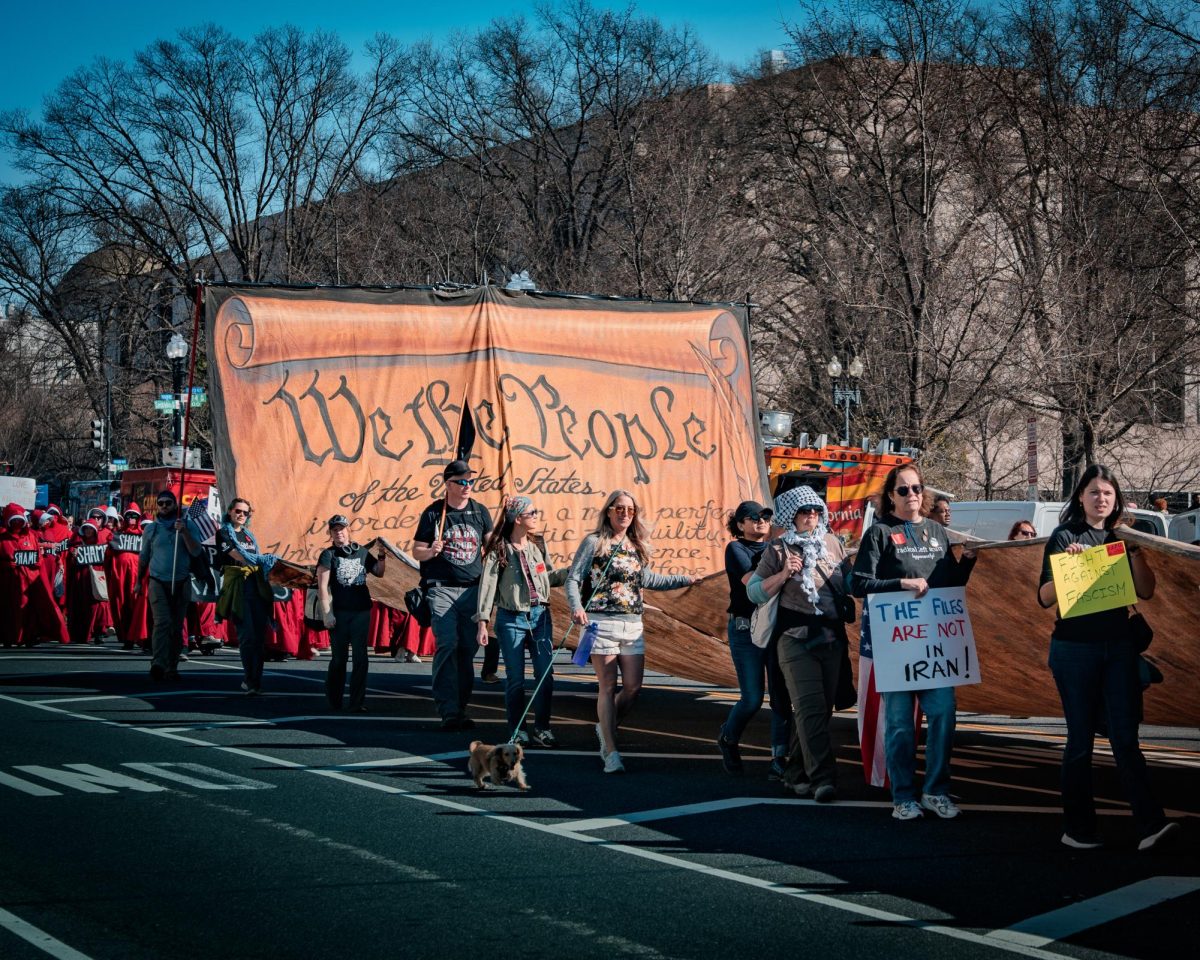

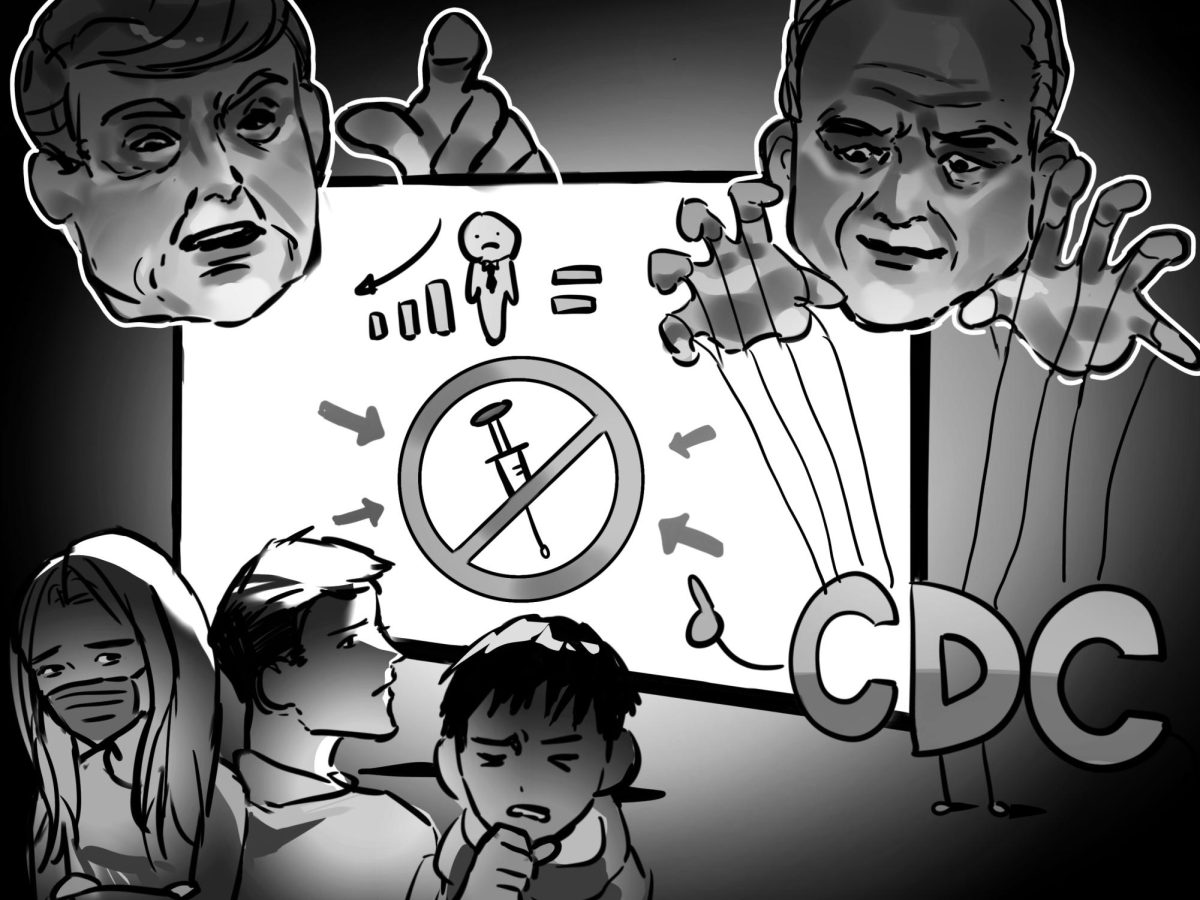











































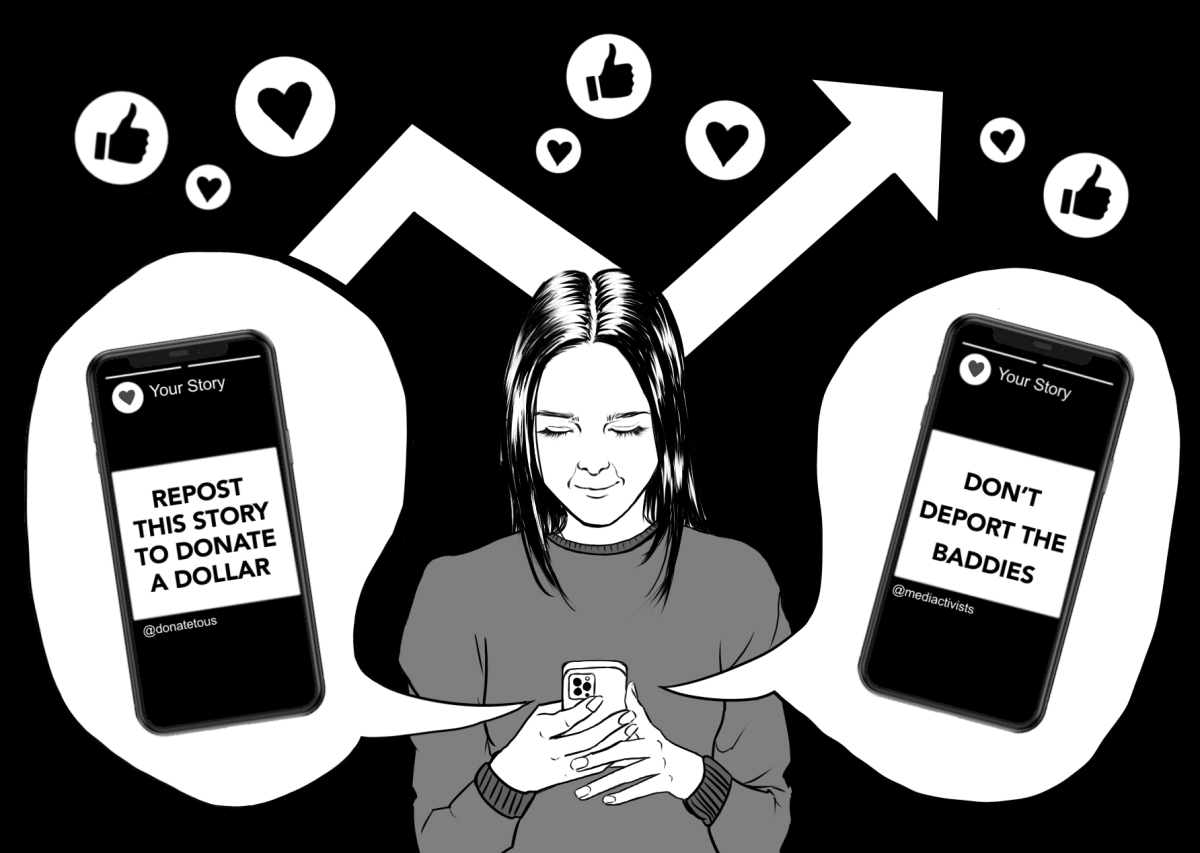
For this generation, a charitable image is the final destination — and social media is the fastest route to get there. Given the recent political climate of America, which includes nationwide ICE raids targeting immigrant communities, renewed attention to the Epstein files, and the ongoing Israeli-Palestinian violence, social activism has become not just a major topic of discussion within classrooms, but also a defining feature of a person’s moral and political standing. While political visibility is a crucial first step to awareness, especially with social media as a platform for rapidly spreading ideas, showcasing political participation only for public perception prioritizes visibility over tangible impact.
Performative activism refers to the act of showing support for a cause while staying indifferent to the actual situation, maintaining or boosting one’s own reputation without executing motions of change. “Activism” then becomes an argument of moral superiority through what a person publicly supports, reducing the purpose of spotlighting heinous acts and instead emphasizing an individual’s ethical status. Given the recent political climate, from nationwide ICE raids in multiple states, specifically in Minneapolis, Minnesota, or the massive release of investigative files related to Jeffrey Epstein, performative activism is especially harmful.
Students themselves are becoming more involved, mirrored through recent AUHSD walkouts and the rise of politically-related social media presence. Since the beginning of Trump’s term, digital “activism” has increased with online campaigns and viral posts used as common responses, especially on platforms such as TikTok or Instagram. While the increase of political visibility may seem like widespread activism, much of it risks a performative nature rather than genuine movements. As a result, activism becomes diluted: it provides incentives such as skipping out on school time or being perceived as charitable online, without requiring authentic intention.
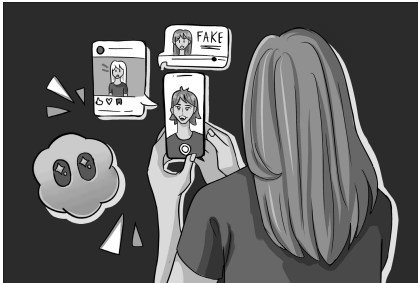
For instance, people often post on social media to discuss appalling situations across the world without physically working against those circumstances. When it comes to reposting TikTok or Instagram stories, the same opinions are simply repeated throughout social media echo chambers, leading students to regurgitate popular opinions rather than forming nuanced perspectives of their own and acting on them. These actions reduce activism against systemic injustice into a trend; awareness is only the first step of activism, and stopping at that step strips the urgency of the movement.
This pattern of performative activism is not only visible online, but also in recent walkouts such as the student walkouts against ICE involving AUHSD students on Jan. 27 and Feb 6, 2026. The purpose of walkouts involves drawing public attention to specific issues to highlight injustices or demands change. This intended impact weakens when people who participate in student walkouts only participate to skip class, as that motivation lacks purpose and understanding, rendering activism an illusion. In contrast, historical events such as the 1960s Civil Rights Movement student sit-ins forced desegregation in various educational environments, directly leading to the formation of the Student Nonviolent Coordinating Committee. This example proves that student-led change can be effective, but only if it is purposeful and intentional, qualities that much of contemporary activism lacks.
Still, social media remains as one of the most accessible paths of activism for student voices, particularly those lacking time and resources. Regardless, students cannot rely solely on online expression as it makes activism passive. Social media should instead be a starting point for eventual meaningful civic participation, which student walkouts could potentially be an example of. The only thing that many students currently lack is a genuine drive for activism.
Ultimately, activism that prioritizes digital appearance and personal comfort over impact does little to challenge injustice. In order for this generation to replicate the deliberate intent of historically successful acts of change, it must move beyond performance and towards participation rooted in understanding.