






























(Photo by Kathleen Vo)
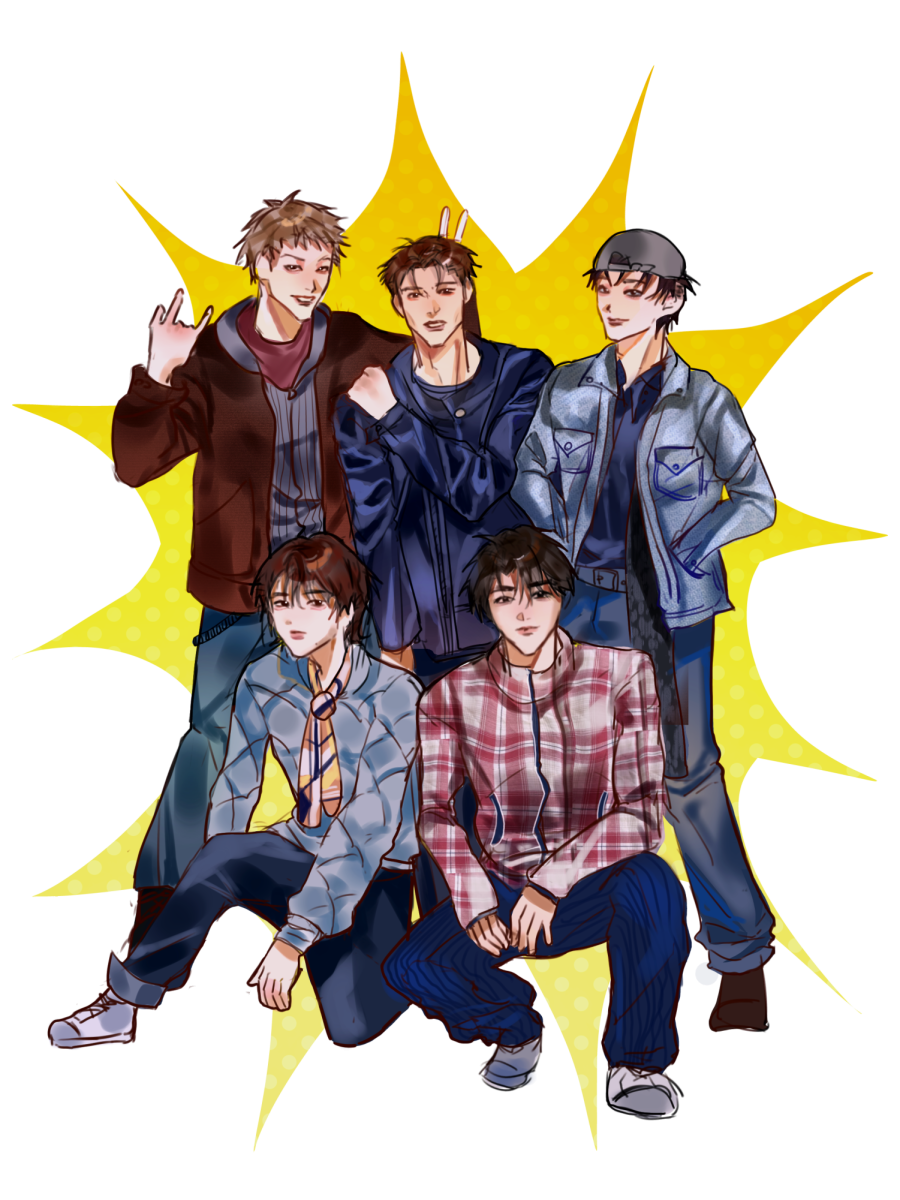
After the first episode’s premiere on Jan. 8, the long-awaited season finale of Jujutsu Kaisen Season 3 Part 1 is set to release on March 19. This season dives into the Culling Games Arc of the manga source-material by Gege Akutami, where the main antagonist Kenjaku orchestrates a massive tournament to evolve humanity, forcing sorcerers and newly awakened superhumans to fight in colonies across Japan.
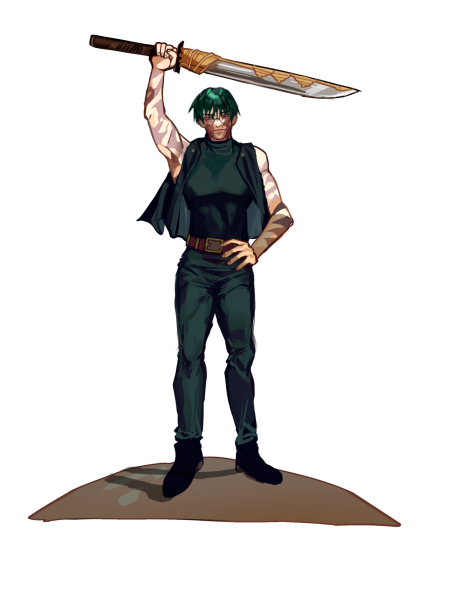
Within the high-stakes battles for survival, the season puts a major spotlight on misogyny within the Zenin Clan — one of the most powerful sorcerer families in the verse. The story highlights ex-Zenin clan member Toji Fushiguro along with his fan-assigned successor Maki Zenin. Maki’s evolution and strength in this particular season doesn’t just mirror Toji’s power, but rather redefines it through a feminist lens, marking a major shift for women empowerment in anime.
Even as an antagonist of previous seasons, Jujutsu Kaisen fans often admire Toji for exhibiting immense physical strength despite not possessing cursed energy — the anime’s form of magic. However, Season 3 doesn’t specifically focus on Toji’s own ability, but rather him as a blueprint for Maki Zenin’s strength.
Like Toji, Maki’s lack of cursed energy forces her to make up for it with raw physical capabilities, yet Maki’s limitation is further framed as a weakness by her family due to her societal position as a woman. Regardless, in Season 3 she is able to showcase her independence and defiance against the Zenin Clan’s oppressive sentiment.
In Jujutsu Kaisen, the Zenin Clan reflects the ideals of many ‘traditionally misogynistic’ groups. As a major patriarchal echo chamber, the clan reduces women to mere objects subservient to men. This is highlighted in episode 4 of the new season, where Maki defends herself from the clan through an act of mass slaughter — a symbolic turning point in the story. Viewing Maki as a failure lacking cursed energy, clan elders conspired to eliminate her. Eventually, her father, Ogi, traps and severely wounds her and her sister, Mai, resulting in Mai’s wish to “destroy everything,” and subsequently Maki’s massacre of the Zenin Clan.
Simultaneously, however, fans often refer to Maki as “the next Toji,” which completely limits her self-earned strength and impressive position in a role once dominated by men. Maki’s purpose in the new season challenges this label, as well common shōnen tropes, which sideline female fighters or give them emotional support roles. Maki serves as a representation for women in action-heavy anime spaces, not only proving that strength is not tied to gender or clan approval, but also exposing how the Zenin Clan’s misogynistic system suppresses women while rewarding their male counterparts. Maki does not simply replace Toji, rather her story stands as a powerful example of women’s empowerment in animated media. This is particularly important for modern audiences as viewers grow increasingly critical of systemic inequality, with global audiences calling for better representation and the abandonment of outdated, stereotypical tropes.