












































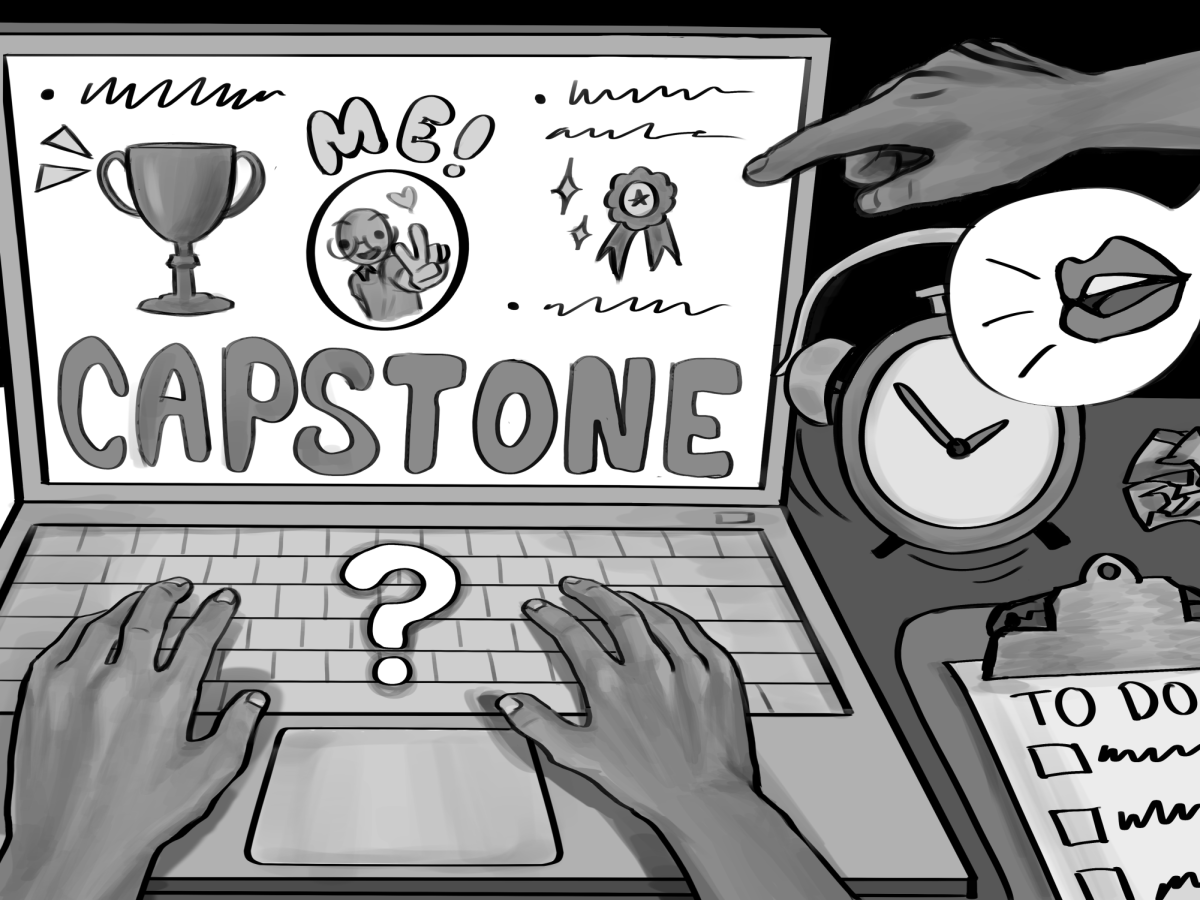
Since 2022, Oxford students have been tasked to complete and reflect on semester capstones, an initiative cultivated into a professional portfolio for students to present in the spring of their junior year. Alumni and seniors have spoken to the positive reflections and experiences gained from the presentations and capstone. However, as this year’s junior capstone presentation on Feb. 25 approaches, a multitude of juniors still misunderstand the purpose of the project, complaining about how the presentation was proposed and mandated by the district; teachers whose curriculums are impacted by obligatory portfolio-work time are also looking for other solutions. In order for the capstone experience to be as meaningful as possible for junior students, clarity and awareness regarding the purpose and future application of the presentation is crucial, as well as an attentive and personalized approach from the administration to better implement the portfolio into the classroom.
Though all students at Oxford are required to update their portfolio each year, only 8th grade students and juniors are given a day to present. Though the mandatory portfolio was intended to become a hub of projects that students could reference in their senior year for college applications, and the oral presentation aspect was to help students practice their public speaking and interview skills as they presented their journey through high school to a panel, the burden of presenting during the hardest academic year of high school becomes a heavy one for numerous students.
“11th grade is an intensive year where students have so many responsibilities, applications, and tough classes,” junior Sruthi Desigar said.
The district has shown a trend in the past years to implement a shallow guidance for the portfolio all through junior high and the 9th and 10th grades, until students are suddenly hit with a serious expectation and emphasis on a polished portfolio and presentation to be delivered junior year.
“I felt that it was useless at first and that it was more obligatory than something I wanted to do. I was also dreading the presentation because presenting isn’t that fun or exciting to do,” Brian Le, a senior who presented his junior capstone last year, said.
Teachers are also impacted by the implementation of the capstone, as specific classes have been designated as periods in which the students would be mandated to work on their capstone. This year, junior students were asked to work and be graded on their ability to update their capstone in their AP English Language class, impacting the curriculum that the teachers had planned before. Furthermore, concerns over “forced” assignments simply for the sake of having a capstone in all classes detract from the original purpose of meaningful and intentional education.
However, the benefits that the district intended to produce — helping students prepare themselves for college applications, strengthening interviewing skills, and taking the time to reflect and grow from their personal and academic experiences — are apparent as well.
“The main thing I learned from the capstone project was that everyone has their own unique purpose and path. [The capstone presentation] was genuinely beneficial. It helped me to brainstorm what was important to me and helped me reflect who I am as a person,” senior Lena Lee said.
Lee is not alone in her feedback about the presentation, as numerous other students shared about their positive experience regarding the capstone, regardless of what they had initially thought about the assignment.
“I felt pretty satisfied with everything. The panel also gave me helpful tips and shared about their experiences. Having the opportunity to share my story in an environment that I knew I would be heard was definitely helpful,” Le said.
Though the results of the portfolio presentation might be positive, in order for students to gain more reflection and meaning out of this junior capstone, the district must work better with its administrations, staff, and students to alter its implementation. For students already facing numerous responsibilities in junior year and teachers whose curriculums are impacted, proposing the capstone with an approach of growth, learning, and value rather than something mandatory to be accomplished before the end of the school year is essential.