























































When a student signs into school late through the attendance office, a machine automatically prints a detention receipt, assigning them detention. No questions asked — just a slip that demands their presence after school the following Wednesday. Though the policy is administration’s measure to hold students accountable and encourage better time management, it instead ends up building resentment for the system and unhealthy mindsets about school rather than genuine growth.
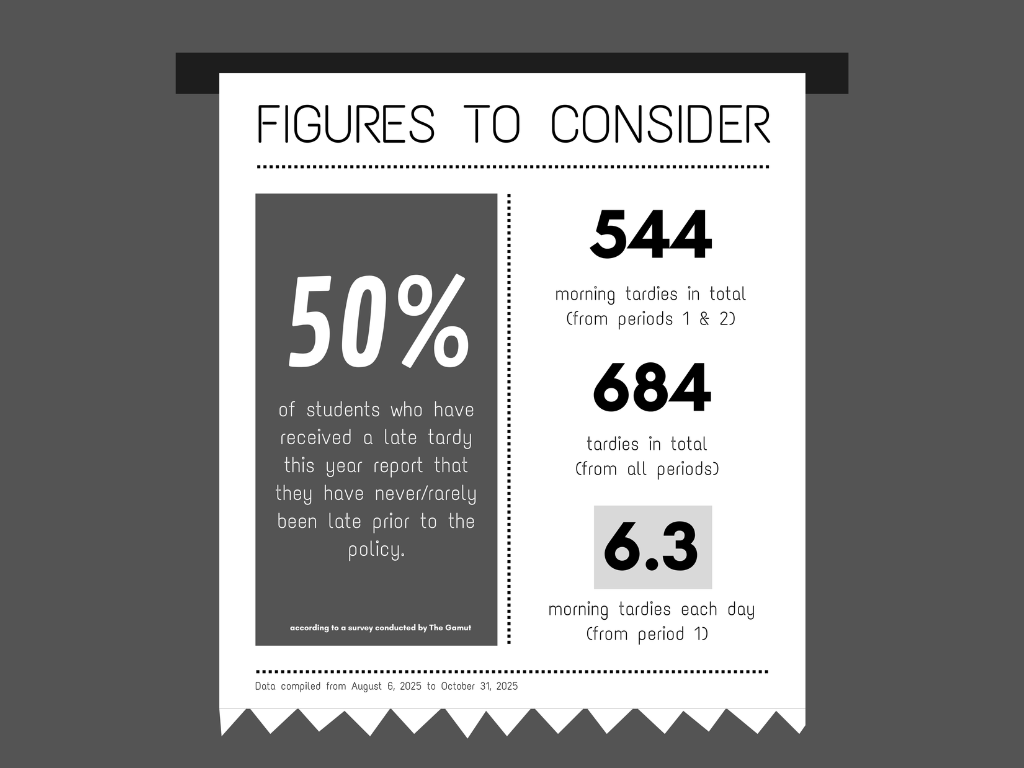
In a survey of 154 students conducted by The Gamut, more than 50% of respondents who have received a late detention this year reported that they had never or rarely been late to school before the detention policy was implemented. Typically punctual students found the rule unnecessarily strict and unfair, as even one minute of tardiness results in a thirty-minute detention after school. These students who have consistently demonstrated responsibility and reliable attendance receive the same amount of punishment as a repeated or intentional tardy student. The blanket approach overlooks the circumstances of the tardy and undermines detention’s purpose of breaking bad habits, punishing students who may not have habitual issues with lateness.
“Tardiness has never been a habit for me, so it’s not like I learn anything from having to serve detention. I didn’t reflect on any supposed “bad behavior” or “bad habits” during detention because they didn’t exist,” said junior Julia Shin. “All detention did was frustrate me, since I thought it was unreasonable.”
School should be a place of learning where students are excited to come, even if they might miss five minutes of their class — not wondering whether it would be worth it to arrive and receive a detention.
“I just feel like it is unnecessary and doing too much,” said senior Rishi Mishra. “Oxford is the one school where student attendance should not be as big of a concern, as the people that come here are the most academic compared to the rest of the schools.”
Instead of immediately issuing a detention, administration should consider a warning system: a first-time tardy earns a warning, and accumulating more results in action taken. Keeping the warning system automated would not add to the amount of time teachers spend issuing a detention, one of the issues admin sought to fix as stated in a previous interview with assistant principal Matthew Griffin.
While schools should motivate students to be as punctual as possible, the current policy has also induced stress and unhealthy mindsets about school. There is less of a punishment to missing school than being late, which seems counterintuitive when the policy’s purpose was to encourage attendance. School should be a place of learning where students are excited to come, even if they might miss five minutes of their class — not wondering whether it would be worth it to arrive and receive a detention.
“Taking into consideration traffic and unnecessary factors, this is such [an ineffective] way to stop people from coming late,” said 8th grader Edward Lee. “Most people would probably just skip class altogether to make sure they do not get detention.”
Beyond the student outcry and complaints, there is a clear need for a shift toward a more understanding approach to tardiness. A system that recognizes context builds trust and cooperation with students rather than resentment. Attendance should come from a love of learning and self-motivation, not fear of a printed ticket to detention.