






































Susan Lorcinz claims she was the “perfect neighbor”. But the “perfect neighbor” doesn’t shoot her fellow neighbor, a young Black mother of four, and then claim she did so to protect herself. Released to Netflix on Oct. 15, Geeta Gandbhir’s true crime documentary film, “The Perfect Neighbor,” weaves together police body cam footage to capture the harrowing murder of Ajike Owens. Though Gandbhir’s direction is stellar, the film’s true power lies in its exploration of America’s “stand your ground” laws that enable and exacerbate racial violence.
Set in a predominately Black, working class neighborhood in Ocala, Florida, “The Perfect Neighbor” follows Lorincz, a middle-aged White woman, who resents her neighbors, especially the young children who often play football outside. Her rancor reaches its tipping point on the night of June 2, 2023, when she throws roller skates at nine year old Israel Owens. When his mother, Ajike, confronts her, Lorincz fatally shoots her. Lorincz invokes Florida’s “stand your ground” laws—which allows deadly force to prevent oneself from imminent harm—to portray the murder as an act of self defense.
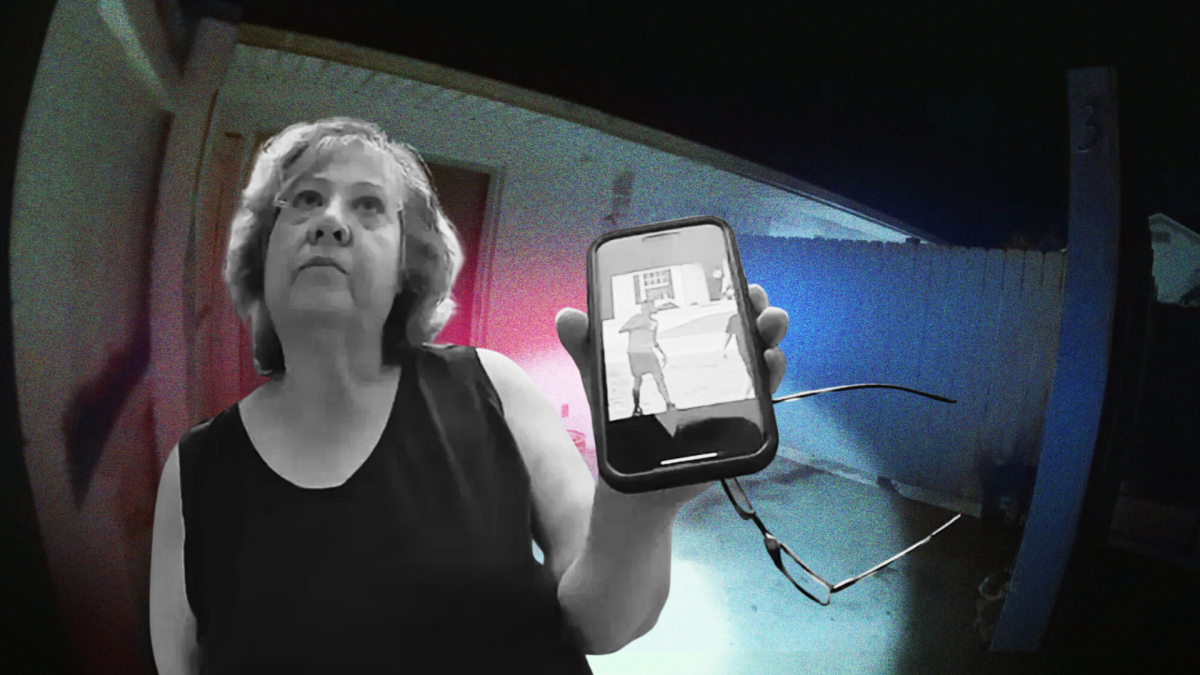
Lorincz wasn’t defending herself. She had every intention of inflicting violence on one of her Black neighbors, and Gandbhir’s integration of police body cam footage proves her to be a complete liar. From irrational accusations to late-night delusions, the footage reveals Lorincz’s pursuit to convince police officers that the children playing outside are violent and obtrusive.
Gandbhir’s body cam directing approach elevates the film’s storytelling, focusing on raw, unfiltered moments that would otherwise go unseen if not for the footage. In one scene that unfolds after the murder, an angry neighbor screams at the police for not having yet arrested Lorincz. This moment of fiery indignation is one of many body cam scenes that heighten the poignancy of the film, capturing the real, human anger Owens’ murder brings about.
But the film crosses a troubling line. Its most heartbreaking moment—a scene depicting Owens’ husband explaining to their kids that she isn’t coming home—is also its most unnecessary. Viewers don’t need to intrude on such a heartbreaking moment to understand the sheer magnitude of the tragedy. This scene only exploits Owens’ family and their grief to show the devastating outcome of Lorincz’s violence.
Nevertheless, “The Perfect Neighbor” is a groundbreaking exposé of America’s “stand your ground” laws, which have disproportionately allowed White people to get away with violence towards Black people. In the second half of the documentary, footage of police questioning Lorincz reveals she had researched the laws prior to murdering Owens. The footage accentuates the film’s critique of “stand your ground” laws as a common defense for racially motivated violence, portraying Lorincz as a ruthless racist and nothing else.
While “The Perfect Neighbor” should have excluded certain scenes in respect of Owens’ family, it still offers a compelling look at how “stand your ground” laws endanger Black people. Gandbhir confronts these racial disparities with a film that is as moving as it is frustrating, demanding justice for all those who have been wronged by these laws.