




















































On Nov. 6, Representative and Former Speaker Nancy Pelosi announced she will retire from the U.S. Congress at the end of 2026 and not seek reelection for a 21st term. Her departure, after decades of service, draws attention to a long-standing reality: American political leadership is too old.
With the average congressional member being 58 years old, twenty years above the U.S. median age of 38, a generational shift in leadership is in order. Although experience is valuable, the refusal of older politicians to step down has impeded progress, from understanding modern issues to stifling accurate demographic representation; term limits have become a political and democratic necessity.
Current U.S. policymakers no longer adequately represent the country they serve. Millennials (ages 29-44) make up a majority of the U.S. population at 22% and the workforce at 36%, with Gen Z (ages 13-28) close behind at 21% and 15% respectively. Yet, this demographic dominance is nowhere in Washington, DC. Millennials hold 15% of the House and 5% of the Senate, and Gen Z represents only 0.2% of the House, all tiny fractions of elected officials. In stark contrast, Gen X (ages 45-60) and Boomers (ages 60+), both no longer the population or workforce majority, collectively control 80% of the House and 89% of the Senate.
This generational gap blocks impactful policy change and intensifies youth political nihilism. Viral videos routinely showcase older leaders’ confusion during congressional meetings about AI and social media — most famously during TikTok CEO Shou Chew’s 2023 hearing. There is a clear and substantial disconnect and a lack of knowledge on urgent, fast-moving modern issues. Critical policies on climate change, an existential threat to younger generations and consistently ranked a top concern for those aged 18-29 in a 2022 Tufts survey, have repeatedly been stalled or gridlocked by legislators with deep ties to fossil fuels or weak political will to enact real change. For most long-serving politicians, the worst consequences of climate change lie far beyond their careers and even lifetimes, making them far less inclined to risk reelection for meaningful long-term solutions, instead favoring safe, watered-down compromises that preserve the status quo.
The consequence is a growing sense of frustration and disillusionment among younger Americans due to stagnated change as the same few career politicians dominate Capitol Hill. Across parties, younger voters feel unheard as policies on climate change, technology regulation, and youth economic mobility are crafted by leaders whose experiences diverge significantly from those of youth who will face the long-term outcomes of their decisions. Without structural change, generational turnover in government will continue to solely depend on the rare moments when senior politicians choose to retire.
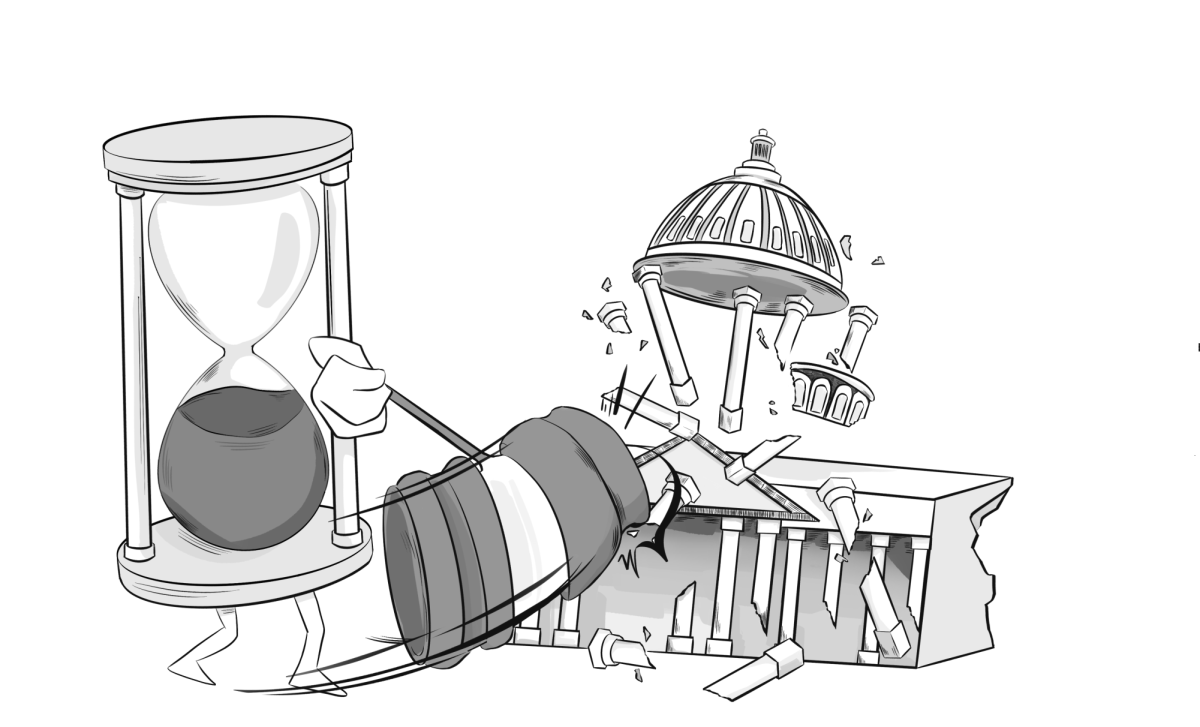
To create a system that encourages fresh leadership, term limits offer a direct and widely supported solution. Currently, no Constitutional or federal laws limit the number of terms Congress members can serve, and only 16 states impose restrictions on state legislators. Meanwhile, with rare overwhelming bipartisan agreement, 87% of Americans favor congressional term limits, and 79% support age limits. Required turnover would reduce the electoral advantages of incumbency, such as name recognition, established donor networks, and seniority, as officials must focus on actually serving their constituents and delivering results rather than endlessly campaigning for reelection. It would strengthen accountability in the polls and open the door for a younger generation of politicians, bringing fresh perspectives on emerging technologies, sustainability, and economic inequality.
While some argue that experience is indispensable to a stable and effective government, longevity is not the same as expertise. At a certain point, decades in office impede innovation, becoming hoarded power, not patriotic service. Older politicians’ institutional knowledge about policy and governance can still be preserved without indefinite tenure through mentorship or transition councils to support new representatives.
Pelosi’s retirement should mark the end of an era where politicians can hoard power indefinitely. If older leaders want to leave a “legacy” of meaningful impact, they can start by passing the torch to new, upcoming public servants, letting the next generation have a part in writing their own future.