






















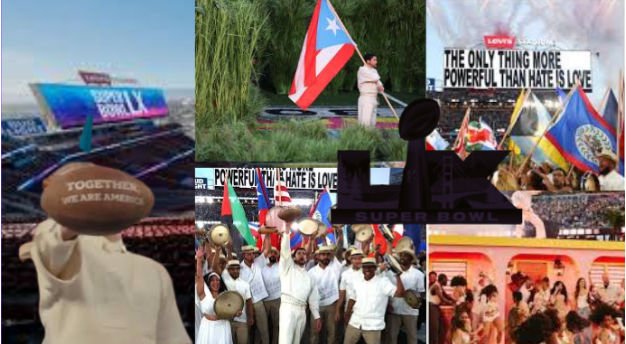
The National Football League’s 60th national championship, Superbowl LX, took place on Sunday, Feb. 8. The Seattle Seahawks ultimately hoisted the Vince Lombardi trophy with a final score of 29-13 over the New England Patriots. However, amidst increasing national unrest regarding Immigration Control Enforcement (ICE), the game took a backseat to the politics surrounding it as questions around ICE’s presence and a halftime performance headlined by Bad Bunny intertwined with political debates on culture, identity, and national disclosure.
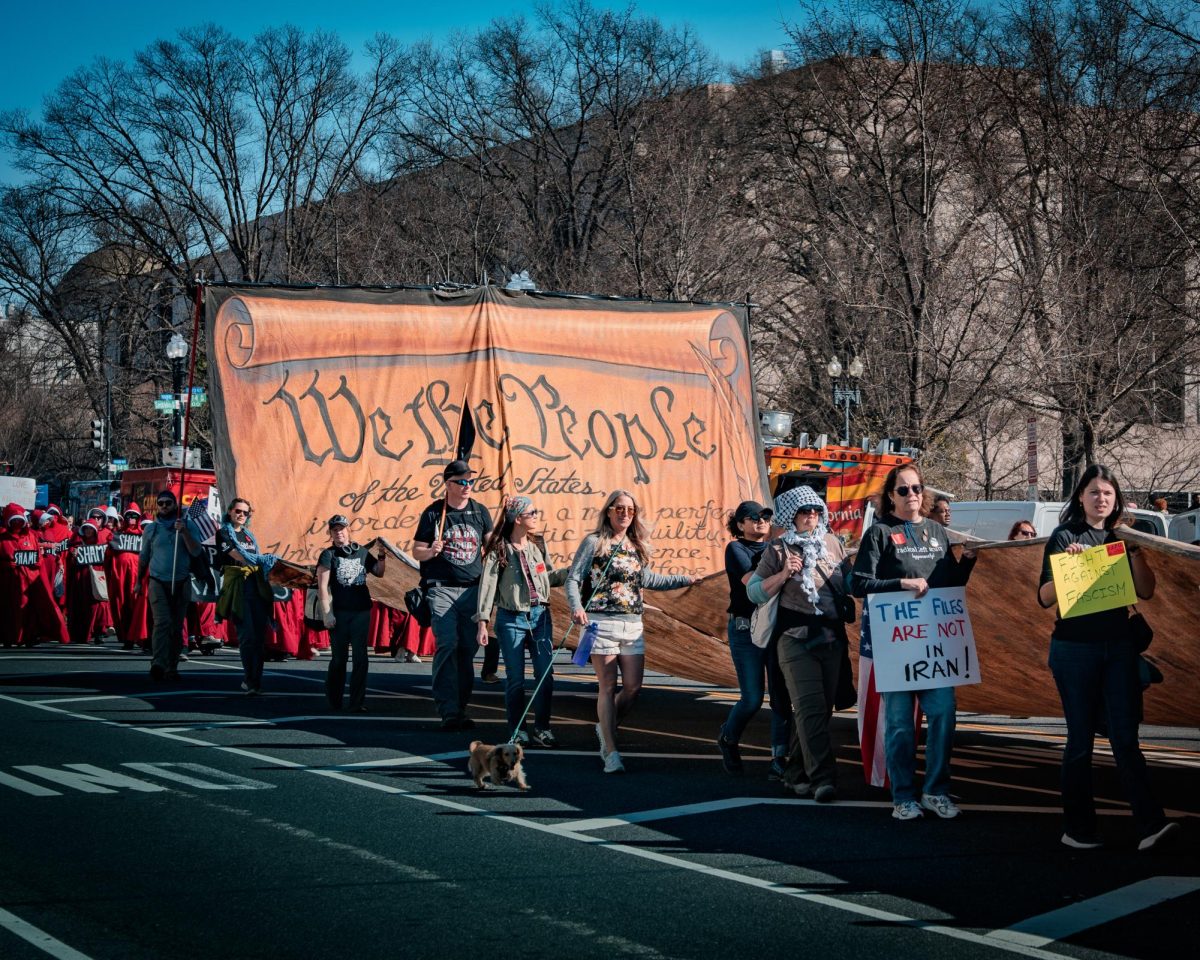
As of early 2026, ICE has detained a record high number of over 70,000 people according to americanimmigrationcoucil.org. Their increasingly violent and fatal methods of detainment have spurred mass civil unrest and fear across the U.S. Protests have risen across the country from local students (see The Gamut’s coverage of OA students’ Walk-Out) to the Grammy’s acceptance speeches.
Controversy around a political presence at this year’s Super Bowl extended to its choice of halftime performer. Bad Bunny is a six-time Grammy-winning Puerto Rican artist and global star. His performance – largely in Spanish and rooted in Puerto Rican and Latin culture — drew both praise and backlash with conservative commentators and some politicians characterizing it as “too political” or not representative of ‘traditional American culture’. Tennessee representative Andy Ogles said that a group of Republican Congressmen also called for an investigation into the show’s content for being “explicit and indecent”—though the Federal Communications Commission reported no violations.
In response, conservative political nonprofit Turning Point USA had announced its own “All-American Halftime Show,” featuring pro-MAGA artists like Kid Rock; it was advertised as a counter-celebration of ‘faith, family, and ‘American values’.
The criticism was heavily based on Bad Bunny’s entirely Spanish discography and open anti-ICE rhetoric. On his last tour, the Puerto-Rican born U.S citizen had excluded mainland U.S. venues for fear of ICE raids at his concerts. The weekend before his halftime performance, he had also utilized his sixth Grammy acceptance speech to reiterate his position:
“Before I say thanks to God, I’m going to say ‘ICE out’,” he said, “We’re not savages, we’re not animals, we’re not aliens. We are humans and we are Americans”.
His halftime performance itself, however, juxtaposed the hate and controversy surrounding the event in a celebration of love and unity. Framed less as a protest and more as a cultural assertion, the show was a vibrant celebration of Latino identity on one of America’s biggest platforms. By the end of the fifteen minutes, he made one message clear: “Together, We Are America”.
However, it is not the first time that the halftime show has been political. Kendrick Lamar’s performance last year openly critiqued racial and social justice, and Eminem’s 2022 performance took a stance against police brutality. However, the subject matter and demographics seemed to change how Bad Bunny’s performance was received, exemplifying how, in the U.S’s current political state, representation itself has been polarized.
Superbowl LX proved that in 2026, even America’s largest sporting event cannot exist outside the nation’s political climate. Whether in debates over immigration enforcement or cultural representation on the halftime stage, the game reflected a country in deep divide despite being gathered around the same screen.