








































As college admissions become increasingly competitive, many high school students feel immense pressure to stand out at any cost. This mentality has led to a rise in “resume-maxxing,” where extracurriculars and leadership roles are exaggerated to impress admission officers. These inauthentic extracurriculars create a system that rewards performance over genuine interest and intent. When students fabricate their extracurriculars, it undermines equity in college admissions and destroys their original purpose as holistic measures of genuine interest, growth, and community contribution.
In recent years, admissions have gradually shifted from evaluating grades, class rank, and standardized test scores, to heavily focusing on extracurricular involvement. While this holistic approach is beneficial as it’s meant to assess how students contribute beyond academics, many students are exploiting the shift by exaggerating the scale and impact of their extracurriculars rather than demonstrating their involvement authentically.
External pressure from family, peers, and social media “college preparatory” accounts reinforces this belief that students must meet a specific quota of achievements to succeed. As a result, students force themselves into a false narrative. The implications of superficial extracurriculars is that students are focused on what can be highlighted on a resume rather than real-world impact.
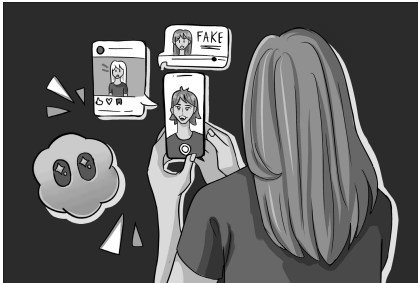
Exaggeration of extracurricular activities often follows a familiar pattern: students create nonprofits whose sole product is a social media page, claim leadership roles which hold very little responsibility, or frame short-term participation as long-term commitments. These nonprofits are marked as “passion projects,” yet lack real passion, as they exist mainly to strengthen college applications.
These overstatements undermine students’ efforts who engage in such activities with genuine intent and effort. When such inflated titles and fabricated commitments are rewarded, students’ years of real dedication to meaningful activities are devalued. This discourages long-term commitment and weakens the value of real effort in the admissions process.
This normalization also promotes a broader culture of dishonesty. As students see peers benefit from misrepresentation, exaggeration eventually becomes the norm. This dismantles student’s ethical and moral stances by encouraging them to compromise morality and honesty for success on paper.
As many extracurricular activities, particularly those relating to volunteering and the creation of nonprofit organizations, focus on social issues, faking them exploits pressing issues for personal gain. Causes like poverty and mental health are reduced to mere tools for enhancing applications rather than problems that must be addressed authentically.
Some might argue that exaggerated extracurriculars are not a serious issue as college admission officers can identify inconsistent commitments, or conduct occasional verifications. However, this ignores the reality: admission officers review thousands of applications in short amounts of time, making thorough verification rare. As a result, exaggerated extracurriculars can go undetected and allow dishonesty to persist.
Faking extracurriculars ultimately harms students, communities, and the broader purpose of higher education: to foster genuine learning, growth, and meaningful contribution. Students should pursue extracurriculars that they genuinely care about and engage in them honestly, as real passion and sustained effort lead to meaningful impact beyond college admissions.