




















































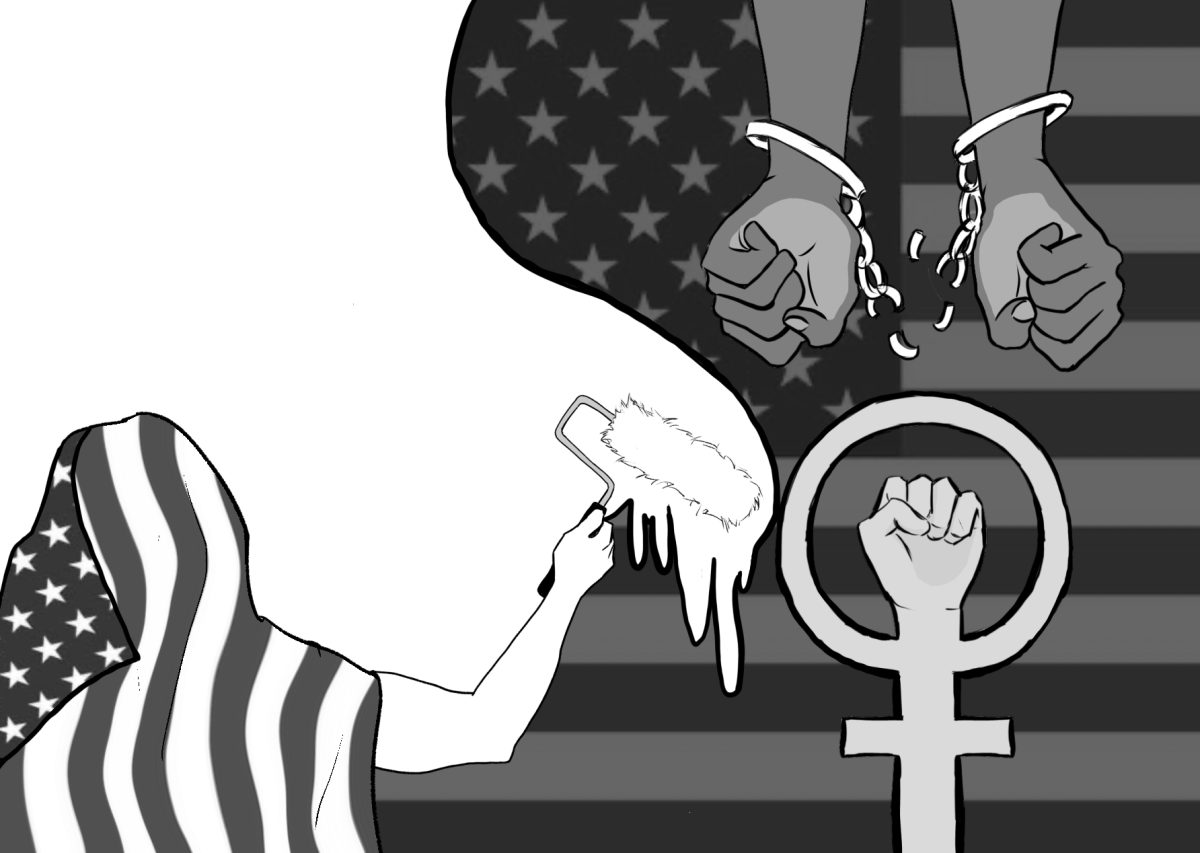
High school students in the U.S are required to spend two to three years studying history: one year of world history and one year of U.S history. Yet despite this requirement, there is no uniform standard across all fifty states — the way history is taught in schools often leaves students with an extremely oversimplified, distorted, and incomplete understanding of the past. U.S history education often prioritizes comfort and patriotism over accuracy, resulting in a selective telling of the past that downplays slavery, minimizes women’s contributions, and overlooks marginalized groups’ mistreatment. In the current political climate, where misinformation is being spread at all levels, it’s crucial for students to have an accurate understanding of history.
In many history curricula, slavery is covered on a surface level, avoiding truths about the full brutality of slavery. Surveys of more than 1,700 social studies teachers and 1,000 high school seniors, along with an analysis of over 12 popular U.S history books from a 2017 study conducted by Southern Poverty Law Center, revealed major gaps in students’ knowledge regarding slavery. Specifically, more than a third of students surveyed incorrectly thought that the Emancipation Proclamation ended slavery, when it was actually the 13th Amendment. When curricula fail to accurately depict how difficult ending slavery was and how systemic racism persists, students misunderstand history. Additionally, experts using a 30-point rubric based on the 10 Key Concepts from Ira Berlin’s Understanding and Teaching American Slavery, found that textbooks failed with an average score of 46%, with each concept rated from 0 (not mentioned) to 3 (in-depth treatment).
Women’s contributions are another overlooked aspect of U.S. history curricula. According to a study by the National Women’s History Museum, out of 737 historical figures which are commonly taught in schools, only 24%, or 178 of them are women. Even when women are shown, 56% of the representation depicts them in domestic roles, while only 2% focus on women in the work force. Such selective teaching erases women’s significant contributions to society, reinforcing outdated gender narratives.
People often argue that history is downplayed to protect students from violent or graphic information. However, protecting students should not mean erasing the past. With age-appropriate content, students can engage with complex realities without being harmed. Sanitizing the past altogether limits students’ ability to think critically about the nation’s history. Learning uncomfortable truths, when taught responsibly, is essential to developing informed citizens that assess the true past, rather than a simplified version of it.
History classes shouldn’t just fuel patriotic pride; students need to learn both the achievements and failures of the U.S., through uniform, age-appropriate national standards. History isn’t meant to be a comfortable subject, and it’s crucial to teach youth to embrace the discomfort. Only then are students pushed to confront moral complexity, understand the real consequences of injustice, and develop empathy and critical thinking skills.